
If you are deciding between the oceanfront and the village in East Hampton, you are really choosing between two distinct ways to live. One puts the beach at the center of your daily rhythm. The other gives you easier access to Main Street, cultural destinations, and a more traditional residential setting. Understanding how these areas differ can help you focus your search faster and with more confidence. Let’s dive in.
East Hampton Living at a Glance
In East Hampton, location shapes how you use your home. The village sits within the broader Town of East Hampton, and the area has a strong seasonal pattern, with the Village noting that nearly 90% of homes are second residences or vacation homes, according to the Village vision statement and town mapping resources.
That seasonal rhythm matters whether you are buying for summer use, year-round visits, or long-term ownership. Oceanfront areas and village locations can both be exceptional, but they serve different priorities. The right fit depends on whether you want your lifestyle to feel more beach-facing or town-facing.
What Counts as Oceanfront
In East Hampton, oceanfront living generally refers to the beach-facing band tied to Village beaches such as Georgica, Main, Wiborg, Egypt, and Two Mile Hollow, along with the lanes that connect to them. These areas are defined as much by access and setting as by the home itself.
The daily experience here is closely tied to beach rules and seasonal management. The Village operates five beach locations, three with lifeguards, and summer vehicle restrictions apply on beaches during daytime hours. Beach driving also requires a Town 4x4 permit, and beach use is actively managed by the Village.
What Village Living Feels Like
Village living offers a more walkable and civic-centered experience. You are closer to the mix of shopping, dining, museums, theaters, galleries, and community destinations highlighted by the Town of East Hampton visitors resources and the Village vision statement.
The character can vary block by block. In the village core, you may find historic patterns, smaller-scale homes, and streets that reflect East Hampton’s agrarian roots. Just outside the core, the setting often shifts toward larger lots, long drives, and more secluded estate streets, as described in the Village history page and the town’s planning materials.
Beach Access vs Main Street Access
For many buyers, this is the biggest decision point. If your goal is to wake up with the ocean close by and make the beach part of your routine, the oceanfront corridor often makes more sense.
If you would rather be able to move more easily between home, town services, dining, shops, and cultural venues, the village or just-outside-the-village areas may be the stronger fit. The official synthesis in local planning and beach materials points to this same divide: oceanfront for immediate beach identity, village for easier access to the town-centered experience.
Privacy Looks Different in Each Setting
Oceanfront privacy is not always what buyers expect. While many properties sit on expansive grounds, the beach itself is public, and the coastal environment can feel more exposed. According to the Town of East Hampton comprehensive plan, some ocean-adjacent neighborhoods near the Maidstone Club include larger homes and extensive grounds, yet many also front public streets and remain visible to passersby.
In village and near-village settings, privacy often comes from landscaping, hedges, fences, and long drives rather than distance from activity. Inland neighborhoods such as Apaquogue and Divinity Hill are described in the same planning materials as having tree-lined streets and estate-like approaches. In other words, both settings can offer privacy, but they do it in very different ways.
Architecture and Streetscape
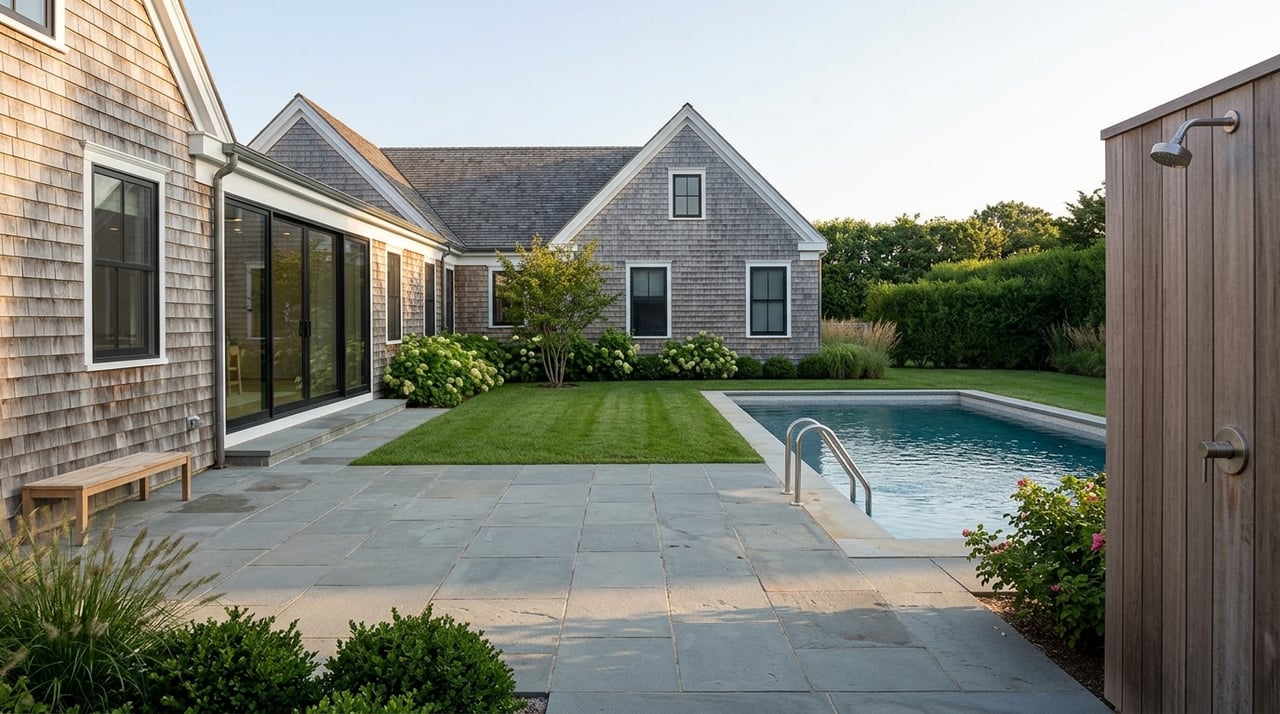
One of East Hampton’s biggest draws is its range of architecture. On the oceanfront, that can mean historic shingled cottages along Ocean Avenue, larger estate homes on the Eastern Plain, and newer compounds designed to fit the surrounding historic and natural context, based on the Village history resources.
In and around the village, the mix is broad rather than uniform. Official planning documents reference Colonial, Greek Revival, Victorian, Tudor, Georgian Revival, modern, and post-modern styles in the area, according to the Town comprehensive plan. That means your search may include everything from compact historic cottages to renovated colonials and larger estate houses depending on the block.
Ownership Means Understanding Regulation
In East Hampton, the setting you choose can affect the approval process for future changes. Within East Hampton Village, owners in one of the four historic districts may need a Certificate of Appropriateness through Village Historic Services before changing significant exterior elements.
Outside the village, review can shift to different boards and standards. The Village Planning Board handles certain subdivision and density matters within the village, while the Town Architectural Review Board evaluates architecture, design, scale, and style for certain buildings and historic districts outside the village. If you are comparing properties, it is smart to ask early whether a home is inside the village, outside the village, in a historic district, or subject to additional review.
Coastal Conditions Matter on the Oceanfront
Oceanfront ownership comes with a different set of practical considerations. Shoreline conditions are part of the decision, not just the view. The Village notes on its history materials that Lily Pond Beach can experience severe erosion and is managed with fencing and patrols, while town climate and sustainability planning identifies sea-level rise and extreme weather as active concerns.
That does not make oceanfront living less desirable. It simply means your purchase criteria should include more than architecture and access. You should also understand how the site relates to shoreline management and long-term coastal planning.
How to Choose the Right Fit
If you are narrowing your search, a few questions can quickly point you in the right direction:
- Do you want direct beach proximity to shape your daily routine?
- Do you prefer easy access to Main Street and village amenities?
- Are you comfortable with a seasonally managed beach environment?
- Do you want a home in a historic district or would you rather avoid extra approval steps?
- Are you drawn to a public-facing coastal setting or a more sheltered inland street pattern?
In East Hampton, there is no universal best option. There is only the setting that best matches how you want to live, entertain, and use the property over time.
Oceanfront vs Village Quick Comparison
| Priority | Oceanfront | Village or Near Village |
|---|---|---|
| Daily lifestyle | Beach-centered and seasonal | Town-centered and walkable |
| Access focus | Beaches and coastal lanes | Main Street, dining, culture |
| Privacy pattern | Larger grounds, more public coastal exposure | Hedges, trees, fences, longer drives in some areas |
| Architecture | Shingled cottages, estates, newer compounds | Historic cottages, colonials, revivals, estates |
| Oversight considerations | Coastal conditions and access rules matter | Historic district and planning review may matter more |
The best decision usually comes down to how you picture your day. If your ideal East Hampton starts and ends with the shoreline, oceanfront may be the clearer match. If you want a classic village rhythm with easier access to shops, dining, and cultural destinations, the village side of the search may feel more natural.
When you are ready to compare East Hampton properties with a sharper strategy, connect with SERHANT. for expert guidance tailored to your goals.
FAQs
What is the difference between oceanfront and village living in East Hampton?
- Oceanfront living is centered on beach access, coastal setting, and seasonal beach management, while village living is more connected to Main Street, dining, shopping, and cultural destinations.
How does beach access work for East Hampton oceanfront areas?
- East Hampton Village operates five beach locations, three with lifeguards, and seasonal rules affect vehicle access, parking, and beach driving permits.
Are East Hampton oceanfront homes always more private?
- Not always. Many oceanfront properties have large grounds, but the beach is public and some homes face public streets, which can create more visibility than buyers expect.
Do East Hampton village homes have historic district rules?
- Some do. East Hampton Village has four historic districts, and properties within them may need a Certificate of Appropriateness for certain exterior changes.
What architectural styles can you find in East Hampton village areas?
- Official planning materials reference styles including Colonial, Greek Revival, Victorian, Tudor, Georgian Revival, modern, and post-modern, along with cottages and estate homes.
What should you ask before buying in East Hampton?
- Ask whether the home is in the village or outside it, whether it offers direct beach access or only proximity, and whether it may be subject to historic or design review.