

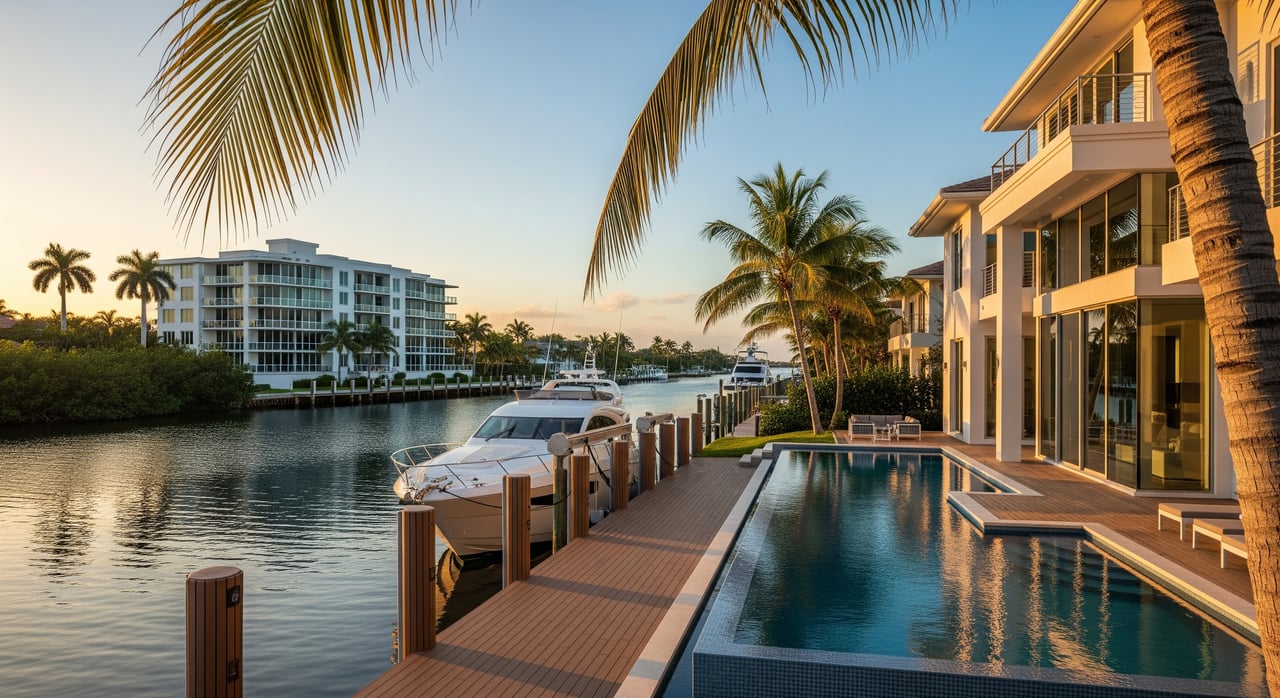
Trying to choose between a Jupiter waterfront condo and a single-family house? You are not alone. The right fit comes down to how you want to live, boat, budget, and maintain your property in a true coastal environment. This guide breaks down costs, risks, maintenance, financing, lifestyle, and resale so you can compare options with clarity and confidence. Let’s dive in.
What “waterfront” means in Jupiter
Jupiter’s waterfront spans the Atlantic coastline, the Intracoastal Waterway, the Loxahatchee River, and the Jupiter Inlet. Each setting delivers a distinct mix of views, boat access, and exposure to wind and waves. Neighboring areas such as Jupiter Inlet Colony and Jupiter Island are known for concentrated single-family waterfront housing and higher price tiers.
Property types you will see
- Waterfront condos: Low-rise and midrise buildings, often along the Intracoastal or near marinas, with shared docks, pools, and managed grounds.
- Waterfront single-family homes: Detached houses with private yards, many with private docks or seawalls and direct water access.
- Inlet and harbor locations: Properties near the Jupiter Inlet and boat basins that emphasize quick ocean access.
Cost comparison: condo vs. house
There is no one-size-fits-all answer on price. Condos often show lower purchase prices than detached waterfront homes, but final cost depends on building reputation, view, slip availability, and amenity level. Houses tend to command more due to lot size, privacy, and private dock potential.
Purchase price and buyer pools
- Condos: Popular with downsizers, seasonal owners, and investors, depending on rental rules. Lower entry price is common, but premium buildings and unobstructed views can close the gap.
- Houses: Attract buyers seeking larger spaces, private yards, or a dedicated dock. Inventory can be limited along prime stretches of the Intracoastal and the Loxahatchee River.
Monthly carrying costs
- Condos: Expect HOA dues that typically cover building insurance components, common area maintenance, landscaping, amenities, and sometimes shared dock upkeep. Associations may levy special assessments for major projects.
- Houses: You manage everything yourself. Budget for roof, exterior, landscaping, pool, seawall and dock maintenance, and any community dues if applicable.
Property taxes and exemptions
Property taxes are based on assessed value. Waterfront homes often carry higher assessed values, while tax rates are uniform by jurisdiction. Review options like homestead and portability with the Palm Beach County Property Appraiser.
Insurance realities on the coast
Coastal coverage usually splits into two policies. Homeowners and wind coverage address wind and hail, often with a windstorm deductible. Flood insurance is separate and is commonly required by lenders if the property is in a FEMA Special Flood Hazard Area, such as AE or VE. Condos may carry a building flood policy for the structure, but unit owners often need their own coverage for interiors and contents. Premiums and availability can vary with Florida’s insurance market and the use of Citizens Property Insurance.
Financing differences
- Condos: Lenders review the building’s financial health and compliance with Fannie Mae, Freddie Mac, FHA, or VA project standards. They examine reserves, owner occupancy, delinquency rates, pending litigation, and insurance coverage.
- Houses: Financing is often more straightforward if the property meets standard lending and title requirements.
Risk and regulations to consider
Waterfront ownership brings unique responsibilities. Understanding flood risk, coastal rules, and marine infrastructure will help you plan your budget and protect long-term value.
Flood zones and FEMA maps
FEMA flood zones like AE and VE indicate higher flood risk and can drive flood insurance requirements and costs. VE zones include coastal high-velocity wave action and carry stricter construction standards. Ask for the property’s elevation certificate, confirm lender requirements, and review the base flood elevation.
Seawalls, docks, and access
Seawalls and docks need periodic inspection and maintenance. Single-family owners are typically responsible for their own structures. In condos, the association often maintains shared seawalls and docks. New docks, dredging, or seawall repairs usually require permits from relevant agencies at the town, county, state, and federal levels. Channel depth, mean high and low water, and bridge clearances affect boat size and ocean access.
Coastal construction and environmental rules
Oceanfront properties may fall within the state’s Coastal Construction Control Line, which brings specific permitting and building standards. Protections for mangroves and seagrasses can shape what you can build or modify at the shoreline.
Condo governance and assessments
The strength of a condo association matters. Review the declaration, bylaws, budgets, reserve studies, meeting minutes, litigation disclosures, and insurance certificates. Understand special assessment history and how the building plans for major projects, including seawall and roof work. Confirm rental rules, pet policies, and parking.
Lifestyle, boating, and resale
Your ideal choice depends on how often you use the property, how you spend time on the water, and how hands-on you want to be.
Boating and dock needs
If you need a private, deeded dock for a larger vessel, a single-family home with deepwater access may be best. If you are comfortable with a shared dock, smaller vessel, or marina options nearby, a condo can work well. Always confirm slip ownership or assignment and any restrictions.
Amenities and maintenance
- Condos: Lower exterior maintenance, amenities like a pool or gym, and a lock-and-leave lifestyle for seasonal stays. Expect rules and community schedules for maintenance projects.
- Houses: More space, privacy, and control of improvements, balanced by full responsibility for upkeep and storm preparation.
Rental and investment considerations
Condo rental policies vary. Many associations limit short-term rentals or set minimum lease terms, which can shape cash flow and occupancy. Single-family homes may offer more flexibility, though municipal zoning and deed restrictions still apply. Factor in management and maintenance when evaluating income potential.
Resale drivers
Single-family waterfront homes often appeal to a wider buyer pool seeking privacy and docks, which can support resale value. Condo liquidity can hinge on building reputation, reserve strength, pending projects, and ease of financing for future buyers.
Quick buyer checklists
When a condo fits best
- You want low exterior maintenance and on-site amenities.
- You prefer a lock-and-leave setup for seasonal use.
- You accept association rules on renovations, pets, parking, and rentals.
- You are comfortable sharing docks or using a marina.
When a house fits best
- You want a private yard, more living space, or room for guests.
- You need a private dock, larger slip, or faster ocean access.
- You want full control over property improvements and timing.
- You accept higher maintenance and insurance responsibilities.
Condo due diligence checklist
- Review declaration, bylaws, budget, reserve study, meeting minutes, insurance, and litigation disclosures.
- Confirm what the master and flood policies cover, and what you need for interiors and contents.
- Request rental rules, parking and pet policies, and delinquency rates.
- Verify whether docks or slips are deeded, leased, or assigned, and any size limits.
- Obtain an elevation certificate and confirm the FEMA flood zone.
- Arrange a marine and seawall inspection if water access matters.
- Confirm project approval and financing options with your lender.
Single-family due diligence checklist
- Order structural, roof, HVAC, pest, mold, plumbing, electrical, and marine inspections.
- Verify seawall condition, repair history, permits, and expected timelines or costs.
- Confirm utilities, stormwater systems, elevation, and any conservation setbacks.
- Check zoning, allowable uses, and any deed restrictions or HOA rules.
- Get quotes for homeowners, wind, and flood insurance before finalizing an offer.
Seller tips to maximize value
For condo sellers
- Assemble HOA documents buyers and lenders will request, and understand estoppel fees and timelines.
- Highlight building maintenance, reserve strength, flood risk mitigation, boat access, and recent capital projects.
- Share clear details on rental policies, parking, and pet rules to reduce buyer friction.
For single-family sellers
- Consider pre-listing inspections, especially for seawalls, docks, and roofs.
- Document permits, elevation details, impact-resistant features, and flood mitigation upgrades.
- Showcase water access, bridge clearances en route to the inlet, and any recent marine work.
Decision snapshots for common profiles
- Boater who needs a deepwater private dock: Focus on single-family homes with sufficient draft, wide frontage, and easy access to the Jupiter Inlet.
- Seasonal owner seeking simplicity: A waterfront condo with strong reserves and a well-managed HOA may offer the best lock-and-leave comfort.
- Investor weighing rental flexibility: Compare condo rental caps and lease terms with single-family zoning and management costs.
- Space-first entertainer: A waterfront house can provide larger indoor-outdoor areas and better control of upgrades.
Your next step
Waterfront in Jupiter is about aligning lifestyle with the realities of coastal ownership. If you want a sharper view of current listings, HOA profiles, and marine access across the Intracoastal, the Loxahatchee River, and the inlet, connect with a local expert who knows the tides as well as the comps. Ready to compare options and move with confidence? List with SERHANT.
FAQs
Which is cheaper overall in Jupiter, a waterfront condo or a house?
- It depends on the building or property, view, access, and amenities; condos often have lower entry prices but include HOA dues, while houses carry higher maintenance and insurance responsibility.
Do I need flood insurance for a Jupiter waterfront home or condo?
- If the property is in a FEMA Special Flood Hazard Area and you have a loan, your lender will likely require it; even outside those zones, flood coverage is a prudent consideration for waterfront.
Who pays for seawall and dock repairs on the waterfront?
- Single-family owners are typically responsible for their own seawalls and docks; condos usually handle shared structures through the association, as outlined in the documents.
Are short-term rentals allowed in Jupiter waterfront condos?
- Policies vary by association and any local ordinances; review the condo’s declaration and rules to confirm minimum lease terms and rental caps.
How does sea level rise affect mortgage and resale in Jupiter?
- It can influence flood risk, insurance availability, and carrying costs over time, which may affect buyer demand and lending; plan for resilience measures and verify current insurance options.
Can I finance a Jupiter waterfront condo with a conventional loan?
- Many projects are financeable, but lenders require a condo project review that examines reserves, occupancy, litigation, and insurance, which can affect loan approval.