
If you have ever wondered whether Tribeca lives up to its reputation, the short answer is yes, but probably not in the way most people expect. This is not just a downtown neighborhood with big-name restaurants and famous lofts. It is a place where industrial history, residential calm, waterfront access, and a polished creative scene all meet in a way that feels distinctly New York. If you are thinking about buying here or simply trying to understand the lifestyle, this guide will give you a clearer picture of what daily life in Tribeca really feels like. Let’s dive in.
Tribeca Has a Distinct Identity
Tribeca stands within Manhattan Community District 1, alongside Battery Park City, the Civic Center, the Financial District, Greenwich South, and the Seaport. That matters because the neighborhood is shaped by a mix of homes, offices, civic buildings, tourists, commuters, and local foot traffic. In practice, that gives Tribeca a layered feel that changes throughout the day.
What makes Tribeca stand out is how well it balances that downtown energy with a more residential rhythm. You can feel the city around you, but many blocks still read as calm and tucked away once the busiest hours pass. That contrast is one of the neighborhood’s defining qualities.
The Architecture Shapes Daily Life
Tribeca’s character is not accidental. The Special Tribeca Mixed Use District was created to preserve stable industries, allow light manufacturing and residential uses to coexist where appropriate, and support housing in converted buildings. That helps explain why the neighborhood still feels like a true live-work district instead of a polished imitation of one.
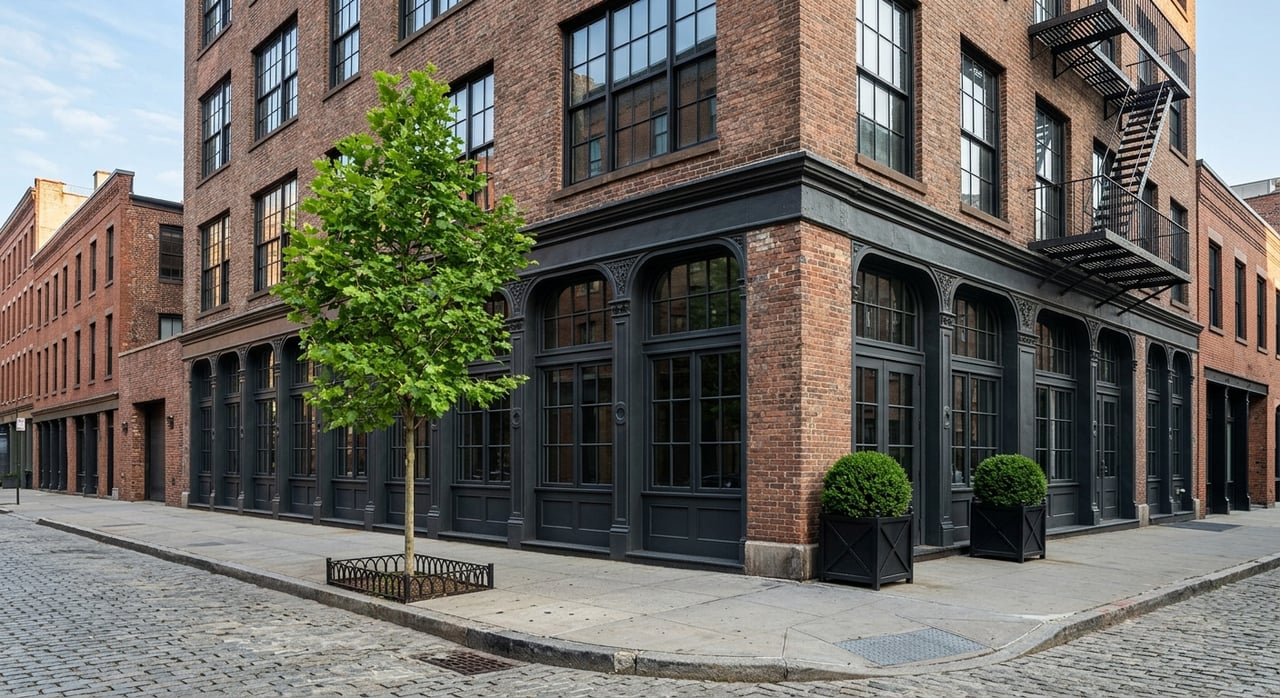
You see that history in the built environment right away. Large former industrial buildings, loft-style layouts, and strong streetscapes give Tribeca a sense of scale and texture that feels hard to replicate elsewhere in Manhattan. For many buyers, that physical character is a major part of the appeal.
Tribeca is also shaped by historic district protections. Tribeca West was designated in 1991, and Tribeca South followed in 1992. Those designations reinforce the neighborhood’s industrial identity and help preserve the visual consistency that makes the area feel so recognizable.
Cobblestones, Plazas, and Quiet Blocks
Street-level details play a big role in how Tribeca feels. NYC DOT has completed cobblestone repairs on Vestry and Laight Streets, and a Harrison Street reconstruction included cobblestone streets, granite curbs, and sidewalks designed to restore neighborhood character. These are not small aesthetic touches. They help give Tribeca its grounded, old-New-York atmosphere.
Bogardus Plaza adds another layer to the neighborhood experience. Located on Hudson Street between Reade and Chambers, it offers movable seating and community events, creating a pedestrian-friendly pause point in the middle of downtown activity. It helps explain why some parts of Tribeca feel surprisingly relaxed, even in a dense part of Manhattan.
Mornings Often Start by the Water
One of the biggest lifestyle advantages in Tribeca is how close you are to Hudson River Park. The park spans 550 acres and four miles along Manhattan’s west side, beginning at the northern edge of Battery Park City in Tribeca and stretching up to West 59th Street. In the Tribeca section, you have access to Piers 25 and 26, a boardwalk, dog run, skatepark, basketball and tennis courts, and other public recreation spaces.
That means your morning can start with a run, a walk, or time outdoors with open river views without requiring a major trip across town. Hudson River Park even describes the area as an easy place to run with nearly uninterrupted Hudson River views at dawn, midday, or sunset. For buyers who want downtown convenience without giving up outdoor access, that is a meaningful part of the lifestyle.
Tribeca’s Creative Side Is Easy To Access
By late morning and afternoon, Tribeca’s cultural identity becomes more visible. The Tribeca Arts District says the neighborhood includes 77 galleries, 10 cultural spaces, 9 design spaces, 2 music rooms, and 1 cinema. Its calendar also regularly features gallery-night programming with more than 80 participating galleries.
Many of these venues cluster along Walker, White, Franklin, Broadway, and Church Streets. That gives the neighborhood a compact and walkable arts circuit rather than a scattered collection of destinations. If you like the idea of stepping out for a coffee, then spending part of your afternoon exploring galleries and design spaces a few blocks away, Tribeca supports that kind of routine well.
The annual Tribeca Festival adds to that identity. Founded in 2001 by Robert De Niro, Jane Rosenthal, and Craig Hatkoff to support the economic and cultural revitalization of Lower Manhattan after the World Trade Center attacks, the festival now spans film, TV, music, audio storytelling, games, and immersive work. It brings another layer of creative energy to a neighborhood that already has strong cultural momentum.
Evenings Feel Polished, Not Frenetic
Tribeca’s nightlife is active, but it tends to feel more curated than chaotic. Hudson River Park highlights waterfront dining and drinks at City Vineyard on Pier 26 and Grand Banks on Pier 25. The Tribeca Arts District also lists live music venues such as The Django and Saint Tuesday, along with arthouse programming at Roxy Cinema.
The overall effect is social and refined. You can have a full evening out, but the neighborhood does not usually read as loud or relentlessly late-night in the way some downtown areas do. For many residents, that is part of the appeal. You get destination dining, arts, and music without feeling like you are living in the center of an all-night scene.
The Housing Stock Has a Clear Point of View
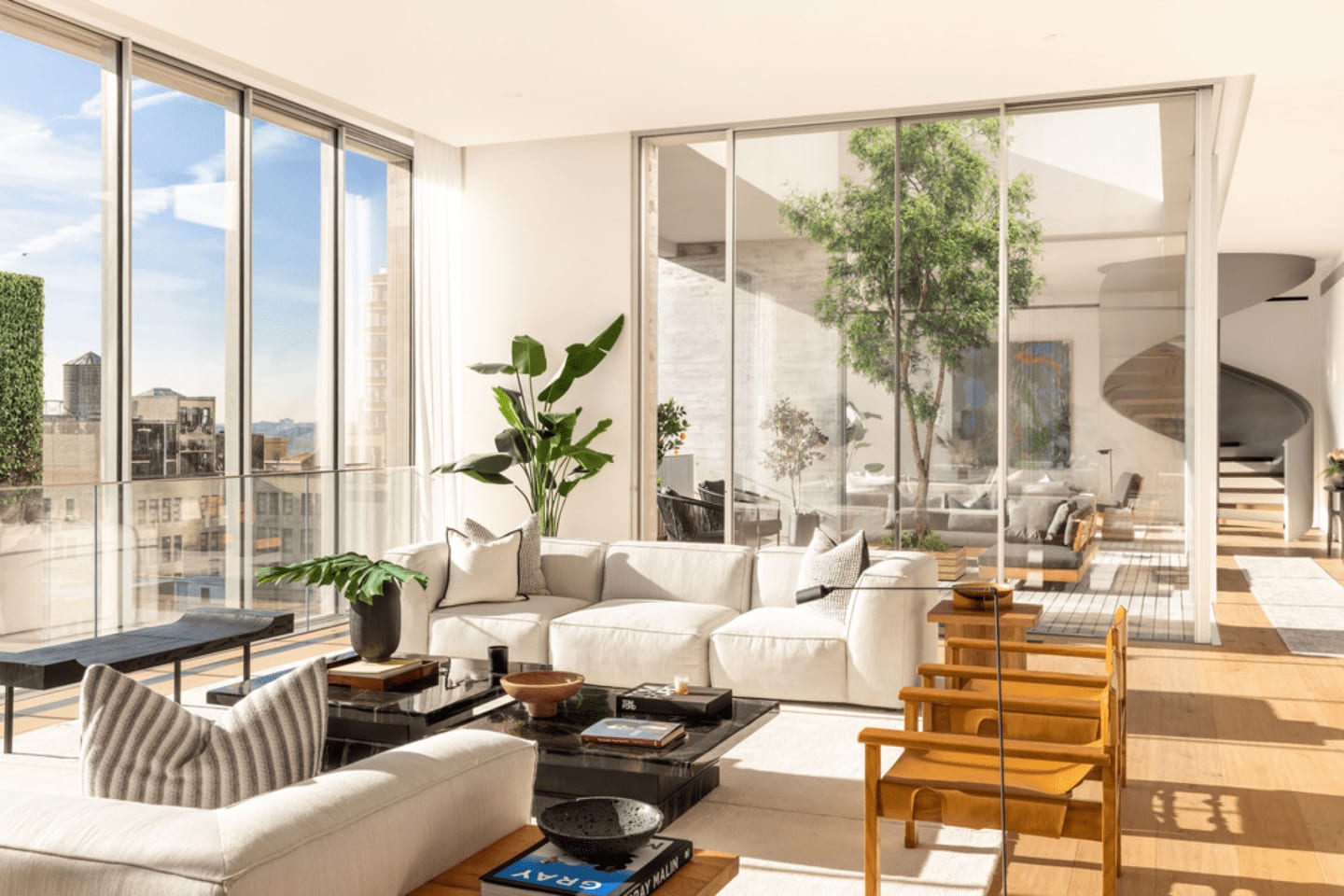
Tribeca’s homes reflect the same preservation and zoning framework that shapes the streets. Because the Special Tribeca Mixed Use District supports residential use in converted buildings and allows compatible uses to coexist, the neighborhood is strongly associated with loft dwellings, adaptive reuse, and large floor plates. In simple terms, the housing stock often offers scale, volume, and architectural texture.
That makes Tribeca especially compelling if you are drawn to homes with a sense of proportion and history. Many buyers connect with the combination of downtown location, loft-style living, and the ability to move quickly between quiet residential blocks, gallery corridors, waterfront recreation, and destination dining. Tribeca does not try to feel generic or interchangeable. Its homes and streets make a very specific impression.
Transit Is Better Than the Quiet Streets Suggest
Tribeca can feel low-key on the block, but it is well connected. The MTA shows Franklin Street on the 1 line, Chambers Street on the 1, 2, and 3 lines with ADA accessibility, and access to A, C, 2, and 3 service in the Chambers Street and Park Place area within the World Trade Center complex. That gives residents practical access to both downtown routines and the rest of the city.
For buyers, this matters because Tribeca’s calm atmosphere can sometimes make it seem more remote than it is. In reality, it offers a strong combination of residential feel and city access. That balance is a major reason the neighborhood continues to attract people who want downtown living with a little more breathing room.
School Planning Takes Research
If school planning is part of your move, Tribeca requires a little extra homework. NYC Public Schools advises families to use MySchools to check whether they have a zoned school, because zoned-school priority is address-specific and not always tied to the nearest building. That means your exact address can make a difference.
For buyers who are planning long term, this is an important part of relocation strategy. If you are considering a move to Tribeca, it helps to research school options early so you can match your housing search with your household’s practical needs.
The Pace Changes After Work Hours
One of the most interesting things about living in Tribeca is the neighborhood’s daily rhythm. Bogardus Plaza is described by the city as a space used by commuters, tourists, residents, and office workers, which reflects a broader truth about the area. During the day, you feel the crosscurrents of downtown activity.
Once office traffic thins, many parts of Tribeca become noticeably calmer. That shift is part of what makes the neighborhood feel both urban and residential at the same time. You are living in a major part of Manhattan, but many evenings can still feel surprisingly measured.
Who Tribeca Tends To Suit Best
Tribeca is often a strong fit if you value space, architectural character, and a downtown location that does not feel constantly overstimulated. It suits buyers who appreciate loft proportions, historic streetscapes, access to the waterfront, and a polished arts and dining scene within a walkable footprint. The neighborhood offers a lifestyle that feels elevated, but still grounded in real New York history.
If that sounds like your version of city living, Tribeca can be hard to beat. It offers a rare mix of scale, calm, culture, and connectivity that feels both cinematic and deeply livable.
If you are exploring Tribeca or thinking about your next move in downtown Manhattan, SERHANT. can help you navigate the neighborhood with clarity and confidence.
FAQs
What is daily life like in Tribeca?
- Daily life in Tribeca blends a residential feel with downtown activity, with busier streets during the workday and a calmer atmosphere in many areas after office traffic fades.
What kind of homes are common in Tribeca?
- Tribeca is closely associated with converted buildings, loft-style residences, large floor plates, and homes that reflect the neighborhood’s industrial and historic character.
What outdoor space does Tribeca offer residents?
- Tribeca offers direct access to Hudson River Park, including Piers 25 and 26, a boardwalk, dog run, skatepark, basketball and tennis courts, and waterfront walking and running routes.
What is the arts scene like in Tribeca?
- The neighborhood has a concentrated arts presence, with dozens of galleries, cultural spaces, design venues, music rooms, and a cinema, plus regular gallery-night programming and the annual Tribeca Festival.
What transit options serve Tribeca residents?
- Tribeca is served by the 1 train at Franklin Street, the 1, 2, and 3 trains at Chambers Street, and additional A, C, 2, and 3 service in the World Trade Center area.
What should families know about schools in Tribeca?
- Families should check NYC Public Schools’ MySchools platform because zoned-school priority is based on the specific address and may not match the nearest school building.