
What if the real luxury of a Brooklyn Heights brownstone is not just what happens inside, but how seamlessly your day moves between private rooms, stoops, gardens, sidewalks, and skyline views? If you are drawn to Brooklyn Heights, chances are you are looking for more than square footage. You are looking for a way of living that feels layered, elegant, and deeply connected to place. This is where the neighborhood stands apart, and it is why indoor-outdoor living here feels so distinctive. Let’s dive in.
Why Brooklyn Heights Feels Different
Brooklyn Heights does not read like a generic city neighborhood. The Brooklyn Heights Historic District designation describes it as an elevated plateau with low buildings, tree-lined streets, and stone sidewalks, with the feel of a largely intact 19th-century residential community. That historic fabric shapes the experience of daily life in a way you can see and feel the moment you arrive.
The street pattern adds to that feeling. Instead of a flat, repetitive grid, Brooklyn Heights offers irregular routes and unexpected vistas that make short walks feel cinematic. One block opens toward a grand row of houses, while the next narrows into a quieter, tucked-away stretch that feels almost village-like.
That variety matters when you think about inside-outside living. In Brooklyn Heights, the transition from home to neighborhood rarely feels abrupt. It unfolds in stages, from doorway to stoop, from stoop to sidewalk, and from sidewalk to some of the city’s most iconic public spaces.
The Stoop as Outdoor Living
In a Brooklyn Heights brownstone, the stoop is not just an entry. In Landmarks Preservation Commission terminology, the stoop is the steps leading to the front door, and the areaway is the open space between the rowhouse and the sidewalk, usually beside the stoop. Together, they create a small but meaningful threshold between private life and the street.
That threshold changes how a home lives. You are not stepping straight from a front door into city motion. You move through a sequence of spaces that softens the transition and gives the facade a sense of rhythm, scale, and presence.
In practical terms, that can make a brownstone feel more connected to the neighborhood than a typical apartment building. A stoop offers a pause point at the start and end of the day. The areaway, railings, masonry, and front steps all shape the sense that your home extends beyond its walls, even before you reach a rear garden or rooftop.
The Streets That Define the Experience
Some Brooklyn Heights blocks feel grand and formal. Others feel intimate and almost hidden. That range is part of what makes indoor-outdoor living here so rich.
The designation report identifies Pierrepont, Remsen, and Columbia Heights as the grander residential streets. These are the kinds of blocks where architecture, setbacks, and rhythm create a strong sense of arrival. Walking home here can feel like part of the lifestyle itself.
On Willow, Hicks, Joralemon, Orange, Pineapple, and Clark Streets, the scale becomes more intimate. The report also notes the very small houses on Willow Place and in the mews, which offer some of the neighborhood’s most tucked-away pockets. For buyers who want a brownstone experience with a quieter, more enclosed feel, these smaller blocks often deliver a very different mood.
Montague Street plays another role. The designation report calls it the principal shopping street, which helps explain why the neighborhood works so well as a compact daily circuit. Your life here can move easily from residential block to local storefronts to waterfront paths without ever feeling disconnected.
Brownstones Are Not One Look
When people say “Brooklyn Heights brownstone,” they often imagine one uniform style. In reality, the historic district includes Federal, Greek Revival, Gothic Revival, and Anglo-Italianate buildings, along with early carriage houses and later 19th-century infill. That gives the neighborhood a layered architectural character rather than a single formula.
For you as a buyer or owner, that means indoor-outdoor living may look different from one house to the next. One home may emphasize the stoop and front elevation. Another may offer a more secluded rear-yard feel. Another may stand out for roofline character, masonry details, or the way it frames views from upper floors.
That variety is one reason Brooklyn Heights remains so compelling. You are not choosing only a floor plan. You are choosing a relationship between architecture, block character, and outdoor experience.
Rear Yards and Roof Decks
For many buyers, the big question is simple: can a Brooklyn Heights brownstone support outdoor space beyond the stoop? The answer is often yes, but exterior changes on landmarked buildings are subject to review by the Landmarks Preservation Commission.
According to LPC guidance, exterior work includes areas that are not visible from the street. Ordinary interior work usually does not require LPC review unless it affects the exterior. The agency also notes that some non-visible rooftop and rear-yard decks and railings can qualify for FasTrack review.
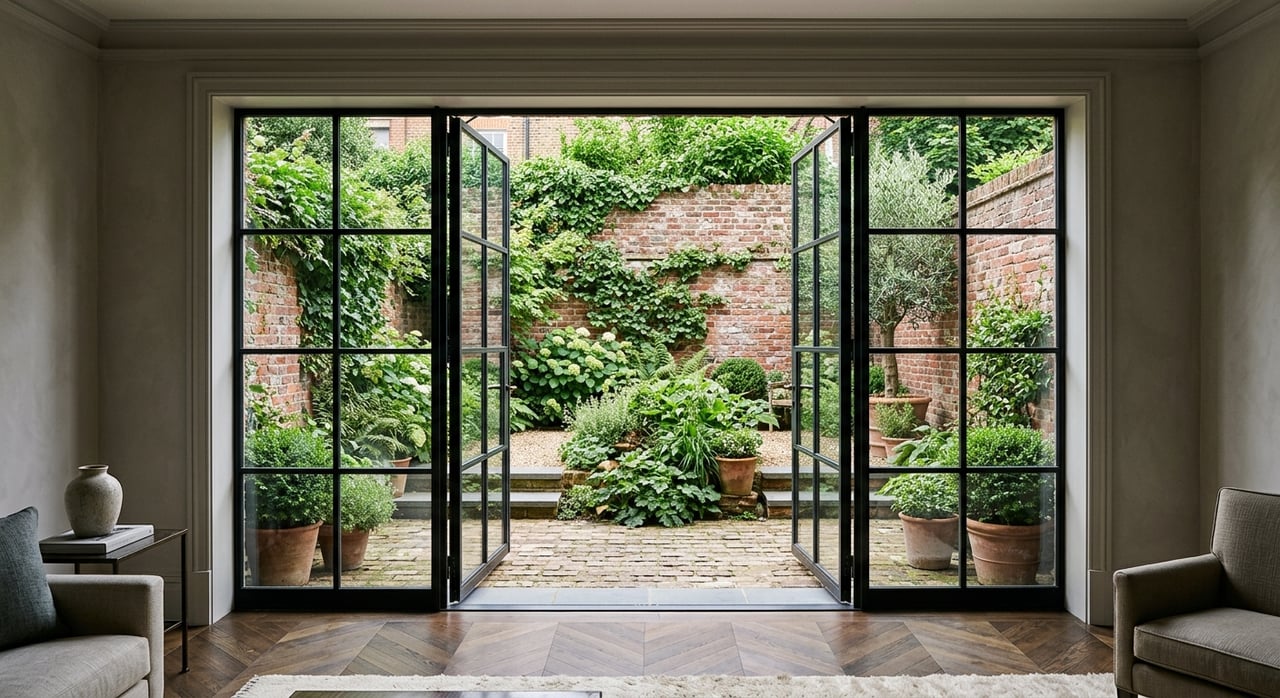
That is important if you are thinking about creating a roof deck or upgrading a backyard setup. It suggests there may be pathways for certain improvements, but those plans need to respect the building’s landmark status and the review process. In Brooklyn Heights, great outdoor living is often possible, but it works best when it is designed with the house and the district in mind.
Preservation Shapes the Lifestyle
In many neighborhoods, outdoor upgrades are mainly a design conversation. In Brooklyn Heights, they are also a preservation conversation. The original designation report warned that removing front steps, adding another story, or radically changing windows could damage the district’s character.
That tells you something important about value here. The neighborhood’s appeal is tied not only to individual houses, but also to continuity across blocks. Stoops, cornices, parapets, fences, railings, and rooflines do more than decorate a facade. They help preserve the visual rhythm that makes Brooklyn Heights feel unmistakably like Brooklyn Heights.
The LPC Rowhouse Manual reinforces this broader view by focusing on the major architectural features of rowhouses. For owners, that means the outdoor parts of the home are not afterthoughts. They are central to how the property lives, presents, and holds its place in the streetscape.
The Neighborhood’s Outdoor Room
One of the biggest reasons indoor-outdoor living works so well here is that your outdoor experience does not stop at your property line. Brooklyn Heights has a powerful extension of living space in its public realm.
The Brooklyn Heights Promenade sits on the East River south of the Brooklyn Bridge, with views of the Brooklyn Bridge, the Manhattan skyline, New York Harbor, and the South Street Seaport. Those views are so central to the area’s identity that city zoning uses the Promenade’s west face as a protected view reference line. That is not just a scenic bonus. It is part of the neighborhood’s civic DNA.
The Brooklyn Bridge adds another dimension. It connects Lower Manhattan and Brooklyn Heights and includes both a pedestrian promenade and a protected bicycle path. So the waterfront edge is not only a place to look out. It is also an active corridor that supports movement, routine, and everyday use.
Then there is Brooklyn Bridge Park, an 85-acre waterfront park that stretches 1.3 miles along Brooklyn’s East River shoreline. With rolling hills, riverfront promenades, lush gardens, and daily access from 6 a.m. to 1 a.m., it offers a dependable rhythm for morning exercise, midday breaks, after-dinner walks, and sunset views.
How Daily Life Flows Here
What makes Brooklyn Heights especially compelling is how naturally these spaces connect. You might start on a quiet residential block, pass through Montague Street for errands or coffee, continue toward the Promenade, and finish with a longer waterfront loop through Brooklyn Bridge Park. It is a neighborhood where private and public outdoor space work together rather than compete.
That flow is rooted in geography as much as architecture. The park’s history notes that it was designed to transition between neighborhood and waterfront, on a site that was once a cargo shipping and storage complex beside Brooklyn Heights and DUMBO. Today, that transition feels remarkably smooth.
For brownstone buyers, this can shift how you think about space. A home may not need a sprawling lot to feel expansive. In Brooklyn Heights, the combination of stoop life, rear-yard potential, rooftop possibilities, and immediate access to the Promenade, the bridge, and the park can create a much broader sense of daily living.
What Buyers Should Pay Attention To
If you are considering a Brooklyn Heights brownstone, it helps to evaluate indoor-outdoor living on several levels at once.
- Entry sequence: Look at the stoop, areaway, and how the front facade meets the street.
- Rear-yard potential: Consider existing outdoor space and how it relates to the interior layout.
- Rooftop opportunity: Ask what already exists and what may require LPC review.
- Block character: Notice whether you prefer the grander feel of streets like Pierrepont, Remsen, and Columbia Heights or the more intimate scale of Willow, Hicks, Orange, Pineapple, Clark, or Willow Place.
- Public outdoor access: Think about how often you would use the Promenade, Brooklyn Bridge, and Brooklyn Bridge Park as part of your routine.
The best brownstone fit is not only about finishes. It is about how the house, the block, and the neighborhood support the way you want to live.
Brooklyn Heights remains one of New York’s clearest examples of a neighborhood where architecture and lifestyle are inseparable. Here, indoor-outdoor living can mean a morning pause on the stoop, a walk down a tree-lined block, an evening route along the Promenade, or a late stroll through the waterfront park. If you are looking for a home that feels connected to its surroundings at every turn, Brooklyn Heights brownstones offer a living experience that is hard to replicate.
If you are exploring Brooklyn Heights brownstones or preparing to position a distinctive townhouse for the market, SERHANT. brings the local storytelling, elevated presentation, and strategic visibility that exceptional homes deserve.
FAQs
What makes indoor-outdoor living in Brooklyn Heights brownstones unique?
- Indoor-outdoor living here is shaped by the combination of stoops, areaways, rear-yard potential, rooftop possibilities, and easy access to the Promenade, Brooklyn Bridge, and Brooklyn Bridge Park.
Which Brooklyn Heights streets are known for different brownstone experiences?
- Pierrepont, Remsen, and Columbia Heights are identified as grander residential streets, while Willow, Hicks, Joralemon, Orange, Pineapple, Clark, Willow Place, and the mews offer a more intimate scale.
Can you add a roof deck to a Brooklyn Heights brownstone?
- A roof deck may be possible, but it is an exterior change subject to LPC review, and some non-visible rooftop decks and railings can qualify for FasTrack review.
Do interior renovations in a Brooklyn Heights brownstone need LPC approval?
- Ordinary interior work usually does not require LPC review unless the work affects the building’s exterior.
Why is the Brooklyn Heights Promenade so important to the neighborhood?
- The Promenade is central to the area’s identity because it offers major East River and skyline views, including the Brooklyn Bridge and Manhattan, and those views are recognized in city zoning protections.
How does Brooklyn Bridge Park support daily life in Brooklyn Heights?
- Brooklyn Bridge Park adds a large, reliable outdoor extension to the neighborhood, with 85 acres of waterfront space, 1.3 miles of shoreline, and daily access from 6 a.m. to 1 a.m.